
Henna Tube Supplier for Gulf Countries: What Importers Look For
The demand for henna tubes has grown rapidly across Gulf countries such as Saudi Arabia, UAE, Qatar, Oman, Kuwait, and Bahrain. From bridal mehndi artists to retail cosmetic chains, importers are increasingly shifting from loose cones to ready henna paste tubes for better control, hygiene, and shelf appeal.
But not every supplier can meet the expectations of the Gulf market. In this guide, we explain exactly what importers look for in a henna tube supplier and how exporters can align with these requirements.
1. Consistent Paste Quality & Flow Control
The first and most important factor for Gulf importers is paste consistency. Henna tubes must deliver a smooth, controlled flow without clogging or sudden breaks.
- Even texture suitable for fine mehndi designs
- No grainy particles that block tube tips
- Stable paste that does not separate during storage
Importers often test multiple batches before finalizing a supplier to ensure consistency across shipments.
2. Climate Stability for Gulf Conditions
Gulf countries experience high temperatures for most of the year. Importers prefer henna tube suppliers who understand hot-climate storage challenges.
- Paste should remain stable during transit
- No excessive leakage or swelling of tubes
- Clear storage instructions on packaging
Suppliers who test their products under warm conditions gain higher trust from Middle East buyers.
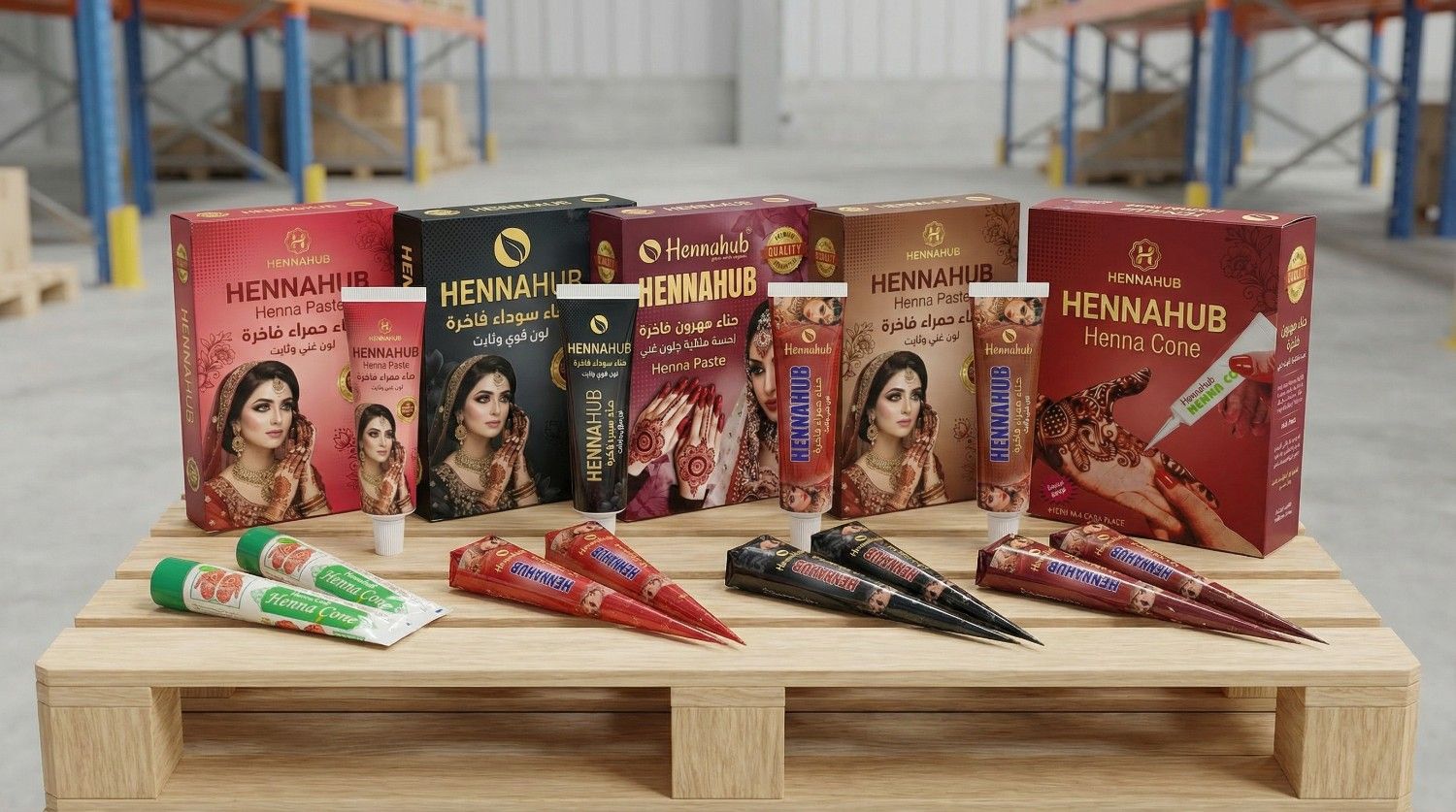
3. Export-Ready Tube & Retail Box Packaging
Packaging plays a critical role in importer decisions. Gulf distributors expect clean, professional, and export-compliant packaging.
- Leak-proof henna tubes with secure caps
- Retail boxes with Arabic-friendly layout
- Clear batch number, manufacturing & expiry dates
- Master carton packing suitable for long-distance shipping
Common export configuration includes: 12 tubes per retail box and 60 boxes per master carton.
4. Arabic Labeling & Market Compatibility
Importers in the Gulf strongly prefer suppliers who can support Arabic product titles and descriptions.
- Arabic product name on front panel
- Basic Arabic usage or category text
- No spelling or cultural errors
Even when English is present, Arabic labeling increases retail acceptance and trust.
5. Private Label & Brand Customization
Many Gulf buyers import henna tubes under their own brand. A reliable supplier must offer private label and OEM support.
- Custom logo printing on tube and box
- Color variants (red, black, mehroon, brown)
- Market-specific packaging adjustments
Suppliers who understand branding requirements become long-term partners rather than one-time vendors.
6. Export Documentation & Compliance
Professional importers expect suppliers to support standard export documentation, including:
- Commercial Invoice & Packing List
- Certificate of Origin (COO)
- MSDS / COA (if required by destination)
- Clear HS code classification
A supplier familiar with Gulf customs procedures helps avoid shipment delays and extra costs.
7. Reliable Communication & Order Transparency
Importers value suppliers who communicate clearly and professionally. This includes:
- Clear MOQ and pricing structure
- Realistic production timelines
- Pre-dispatch confirmation and packing visuals
Trust and transparency are often more important than price alone in the Gulf market.
Why Hennahub India Is Trusted by Gulf Importers
Hennahub India specializes in export-quality henna products, including henna tubes, cones, and retail box packing, with a deep understanding of Gulf market expectations.
- Export-focused packaging & master carton planning
- Arabic-friendly labeling support
- Private label & bulk supply options
- Consistent quality control from sourcing to dispatch
Whether you are a distributor, wholesaler, or private brand owner, choosing the right henna tube supplier determines long-term success in the Gulf market.
Looking for a reliable henna tube supplier for Gulf countries?
Connect with Hennahub India for export-ready henna tubes, customized packing, and professional support.