
From Sojat, India to the Gulf: How Henna Powder Is Manufactured and Exported
Across the Arabian Peninsula—from the bustling souks of Dubai and Riyadh to luxury salons in Doha, Kuwait City, and Muscat—henna (Lawsonia inermis) is more than a cosmetic product; it is a timeless cultural tradition. Whether used for intricate bridal mehndi during Eid and weddings or as a natural herbal hair dye and conditioner, consumers in the Gulf Cooperation Council (GCC) demand uncompromising purity, smooth texture, and rich staining power.
To meet this high standard, Middle Eastern distributors, salon chains, and cosmetic brands look directly to the heartland of global henna production: Rajasthan, India. As a trusted henna powder manufacturer India, HennaHub bridges the gap between the fertile farms of Sojat and the thriving markets of the Gulf. In this comprehensive guide, we pull back the curtain on how authentic henna powder is cultivated, processed, tested, packaged, and exported internationally.
1. Why Sojat is the Global Capital of Henna Cultivation
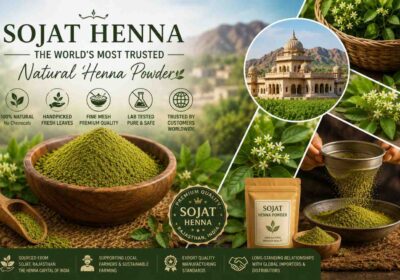
Every batch of world-class henna begins in the soil. Located in the Pali district of Rajasthan, the town of Sojat produces over 90% of India’s henna and holds a prestigious Geographical Indication (GI) tag for Sojat Mehndi.
Why does Sojat dominate global natural henna export to the Gulf? The secret lies in its unique agro-climatic conditions:
- High Lawsone Content: The combination of mineral-rich sandy loam soil, intense desert sunlight, and low atmospheric humidity triggers the henna shrub to produce high levels of Lawsone (2-hydroxy-1,4-naphthoquinone)—the natural dyeing molecule responsible for deep maroon and burgundy stains.
- Rain-Fed Purity: Sojat henna crops rely primarily on seasonal monsoon rains without the use of harsh synthetic fertilizers or chemical pesticides, making it ideal for 100% organic and herbal product lines.
2. Harvesting and Shade-Drying: Preserving the Lawsone
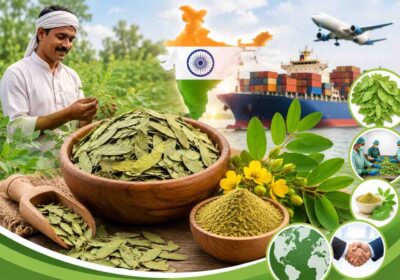
In Sojat, henna is harvested twice a year, with the primary harvest (the Kartik crop) occurring between October and November after the monsoon season. This autumn harvest yields leaves with the highest dye concentration and is the most sought-after crop by every top-tier bulk henna powder supplier.
The Harvesting Process
Farmers cut the leafy branches close to the base using traditional sickles before sunrise to prevent moisture shock. Once cut, the branches are carefully bundled to prevent dirt or foreign weeds from mixing with the crop.
Controlled Shade-Drying
Moisture is the enemy of shelf life, while excessive direct UV exposure can degrade the delicate chlorophyll and Lawsone molecules. Once harvested, the branches are dried naturally until the leaves become crisp and brittle, retaining a vibrant olive-green hue and an earthy, fresh aroma. Farmers then gently beat the dried branches to separate the leaves from the woody stems and twigs. These raw dried leaves are transported to the Sojat Mandi (agricultural auction market), where our procurement experts at HennaHub hand-select only Grade-A lots with minimal stem content and peak dye potency.
3. Milling and Triple-Sifting: Achieving Micro-Fine Texture
Once the raw dried leaves arrive at our manufacturing facility, they undergo an intensive multi-stage mechanical processing workflow. As an advanced henna powder manufacturer India, we ensure zero heat damage during grinding.
Step 1: Pre-Cleaning & Destoning
Raw leaves pass through automated pneumatic cleaners, magnetic separators, and gravity destoners. This removes 100% of field dust, sand grains, small pebbles, stems, and metallic traces before a single leaf is ground.
Step 2: Cold-Pulverization (Milling)
Traditional high-speed grinders generate excess friction heat, which literally “cooks” the henna powder and destroys its staining power. At HennaHub, we utilize specialized temperature-controlled pulverizers that grind the brittle leaves into a fine powder while keeping the chamber cool, locking in the natural aroma and Lawsone potency.
Step 3: Micro-Mesh Sieving (Triple-Sifted BAQ Quality)
Different applications in the Gulf market require different particle sizes:
- Herbal Hair Care Grade (80–100 Mesh): Slightly coarser yet smooth powder that mixes effortlessly into a lump-free paste for hair coloring and scalp masks.
- Body Art Quality / BAQ Henna (120–200+ Mesh / Triple-Sifted): Ultra-fine, silky powder passed through high-frequency vibrancy sifters and air classifiers. This ensures a stringy, butter-smooth paste that flows seamlessly through fine-tip mehndi cones without clogging—a top requirement for bridal henna artists in the UAE and Saudi Arabia.
4. Stringent Quality Checks & Lab Testing for GCC Compliance
Gulf regulatory authorities—such as the Saudi Food and Drug Authority (SFDA) and the Dubai Municipality (Montaji system)—enforce strict safety standards on imported cosmetics and herbal products. Working with an unverified supplier risks container rejection at customs.
As a compliance-focused Sojat henna exporter, every batch produced at HennaHub undergoes rigorous in-house and third-party laboratory testing:
- Lawsone Content Analysis: Spectrophotometric testing to guarantee strong, consistent staining capability (typically 2.0% to 3.0%+ for premium grades).
- Moisture & Ash Content: Moisture is strictly kept below 8–10% to prevent fungal growth during ocean transit, while acid-insoluble ash is tested to verify zero sand adulteration.
- Zero Chemical Adulteration: Guaranteed 100% free from PPD (Para-phenylenediamine), synthetic green dyes, picramic acid, and metallic salts.
- Microbiological & Heavy Metal Screening: Tested for Total Plate Count (TPC), yeast, mold, E. coli, Salmonella, and heavy metals (Lead, Arsenic, Mercury) to satisfy GCC GSO 1943 cosmetic safety standards.
5. Export-Grade Packaging & Private Label Solutions
Pure henna powder is highly sensitive to oxygen, light, and humidity. If improperly packed, it loses its green color and staining potency before reaching the end consumer. At HennaHub, we offer customized, moisture-barrier packaging tailored for wholesale buyers and retail brands across the Middle East:
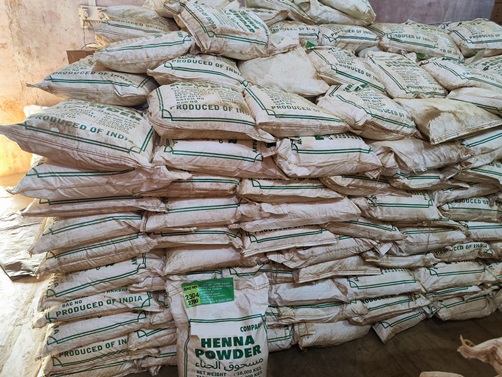
- Bulk Wholesale Packaging: 20 kg, 25 kg, and 50 kg heavy-duty HDPE/PP woven bags or fiber drums with double-layered, heat-sealed LDPE food-grade inner liners.
- Vacuum-Sealed Foil Packs: 500g and 1 kg three-layer aluminum foil pouches that completely block UV light and oxygen, extending shelf life up to 24–36 months.
- OEM / Private Label Henna Manufacturing: Ready-for-retail pouches, boxes, and jars (100g to 1kg) featuring bilingual Arabic and English labeling, barcode integration, INCI ingredient lists, and batch coding compliant with GCC retail regulations.
6. Export Documentation & Logistics from India to the Gulf
Proximity makes sea and air freight between western India and the Gulf remarkably fast and cost-effective. Shipments from Mundra Port or Nhava Sheva (JNPT) reach major GCC ports within 4 to 8 days of sailing.
| Export Specification | Details for GCC Importers |
|---|---|
| HS Code for Henna Powder | 14049019 / 14041011 (Natural Vegetable Dyeing Raw Material) or 33059040 (Retail Hair Care Prep) |
| Major Indian Loading Ports | Mundra Port (Gujarat), Kandla Port, Nhava Sheva (Mumbai), & Air Cargo via Delhi/Ahmedabad |
| Key Destination Ports in the Gulf | Jebel Ali (UAE), Dammam & Jeddah (Saudi Arabia), Shuwaikh (Kuwait), Hamad (Qatar), Sohar (Oman), Khalifa Bin Salman (Bahrain) |
| Container Load Capacity | 20ft FCL (~12 to 14 Metric Tons) | 40ft High Cube FCL (~24 to 26 Metric Tons) | LCL Shipments Available |
Essential Export Documents We Provide
To ensure smooth, delay-free customs clearance at GCC ports, our export desk prepares a complete, error-free documentation dossier:
- Commercial Invoice & Packing List (attested as required)
- Bill of Lading (B/L) or Airway Bill (AWB)
- Certificate of Origin (COO) (Issued by Indian Chamber of Commerce / Preferential CEPA COO for UAE buyers to avail duty benefits)
- Phytosanitary Certificate (Issued by the Government of India Plant Quarantine Department confirming pest-free botanical goods)
- Fumigation Certificate
- Certificate of Analysis (COA) & MSDS (Material Safety Data Sheet)
- Halal, ISO, GMP, and Organic Certifications (as requested by buyer)
- SABER / SFDA / Montaji Support Documents for Saudi and UAE compliance
7. Partner with HennaHub: Your Trusted Bulk Henna Exporter
Finding a reliable henna powder manufacturer India can be the difference between building a market-leading brand in the Middle East and dealing with inconsistent batches. At HennaHub.com, we combine generations of Rajasthani herbal expertise with modern, automated manufacturing and global export logistics.
- Direct from Sojat Source: No middlemen—guaranteed farm-direct pricing and fresh-crop procurement.
- Custom Blends Available: Alongside 100% pure natural henna, we manufacture Indigo powder, Cassia Obovata (Neutral Henna), Amla, Shikakai, and herbal hair color blends.
- Guaranteed Batch Consistency: Standardized shade, mesh size, and Lawsone levels across every container load.
8. Frequently Asked Questions (FAQs)
Q1: What is the HS Code for exporting henna powder from India?
Answer: The primary Harmonized System (HS) Code for natural raw henna powder and henna leaves exported from India is 14049019 (or 14041011). If the product is packaged as a finished retail herbal hair dye, it may also be classified under 33059040 depending on the importing country’s customs tariff schedule.
Q2: Why do Gulf countries prefer henna from Sojat, India?
Answer: Sojat in Rajasthan has a distinct semi-arid climate and mineral-rich soil that produces a natural Lawsone content between 2.0% and 3.5%—the highest globally. This ensures the rich, dark burgundy stain and natural cooling and conditioning properties cherished by consumers across the GCC.
Q3: Can I import henna into the UAE duty-free under the India-UAE CEPA agreement?
Answer: Yes! Under the India-UAE Comprehensive Economic Partnership Agreement (CEPA), eligible agricultural and cosmetic products exported with a valid Preferential Certificate of Origin from India enjoy zero or significantly reduced customs duty when entering the UAE.
Q4: What is the Minimum Order Quantity (MOQ) for bulk export and private labeling?
Answer: At HennaHub, we support both growing brands and large-scale importers. We offer flexible LCL (Less than Container Load) trial shipments starting from 500 kg to 1 Metric Ton, as well as full 20ft and 40ft FCL container loads. Contact our export team at hennahub.com for tailored MOQ details.