

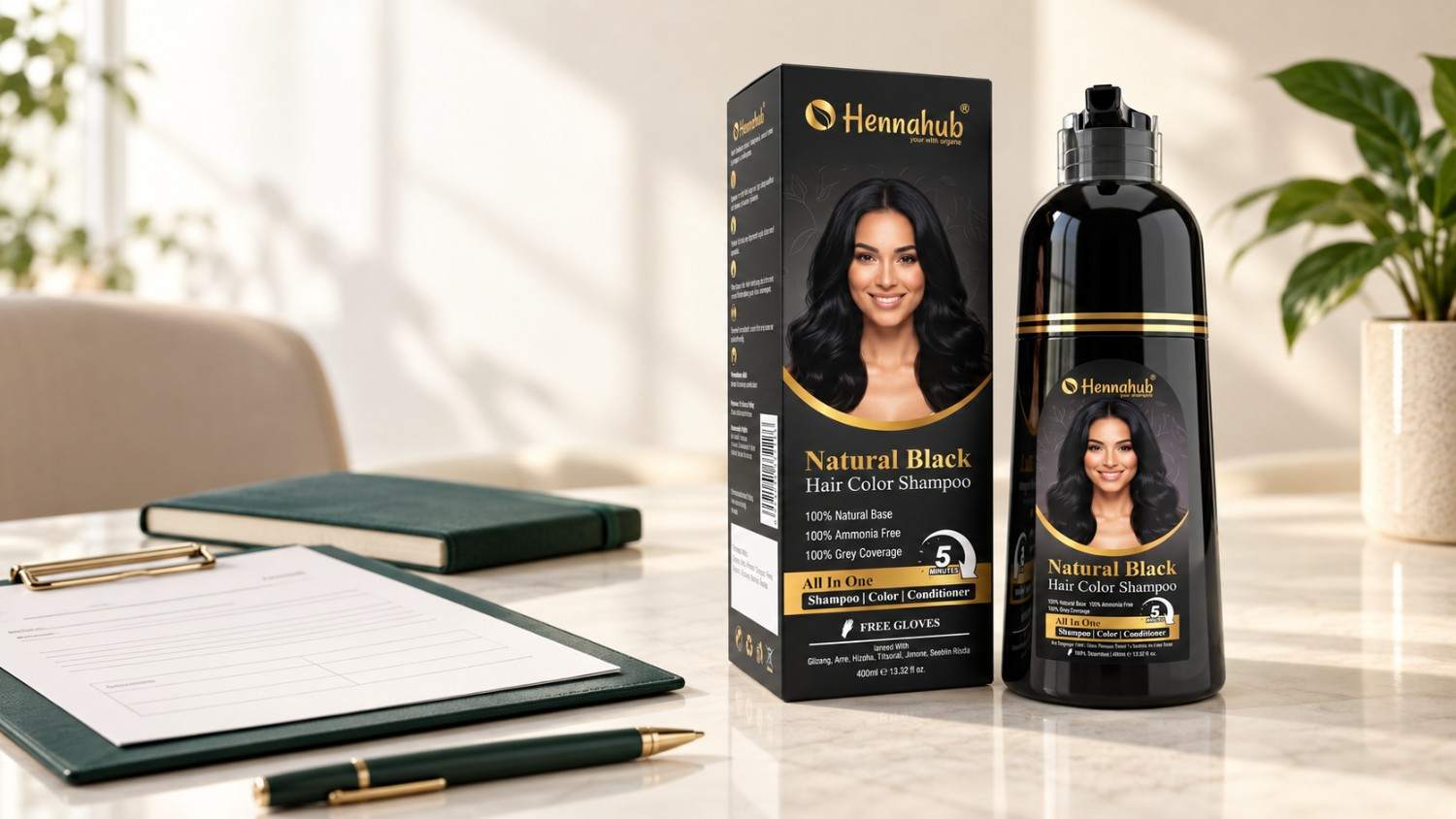
Hair Colour Industry Insights · 2026
Global Demand for Ammonia-Free Hair Colour Products in 2026
A customer sees “ammonia-free” and expects a different coloring experience. A retailer sees a possible addition to its assortment. An importer needs to know whether the formula, claims and documentation support a commercial launch.
Those expectations are connected, but they are not identical. Global interest in ammonia-free hair colour remains commercially relevant in 2026. However, available evidence does not justify treating every country and coloring format as one uniformly growing market.
The opportunity is to meet a defined customer need with a well-documented product. This guide explains the evidence, product differences and practical questions behind that decision.
Editorial disclosure: This article is published by HennaHub India and includes our product links. It is not an independent product test. Full-year 2026 results are not yet complete.
Is There Demand for Ammonia-Free Hair Colour?
Ammonia-free hair colour remains a relevant global product category in 2026, supported by established salon and home-use offerings. Demand differs by country, channel and price point. Buyers should assess verified product claims, formulation, customer fit and repeat orders rather than assume that ammonia-free automatically means natural, allergy-free or faster coloring.
Executive Summary
Ammonia-free hair colour is an established proposition across salon and home-use channels. Buyers are evaluating more than ingredient exclusions: they also need understandable directions, suitable packaging and realistic performance expectations.
The evidence requires careful interpretation. Major brands offer ammonia-free hair color, but wider hair-care growth does not establish a specific growth rate for this segment. Permanent color, direct-deposit products and shampoo-style applications also need separate evaluation.
For retailers and importers, the strongest approach is to define the customer, review the complete formula and evaluate the exact commercial pack. HennaHub India’s product-specific wholesale discussions should connect buyer requirements with specifications, supported claims and destination needs.
What Does Ammonia-Free Hair Colour Mean?
Definition: Ammonia-free hair colour is a coloring product formulated without ammonia. The description identifies an ingredient exclusion. It does not independently establish the product’s coloring mechanism, permanence, botanical content or suitability for every user.
Other coloring ingredients may still be present
L’Oréal Professionnel markets iNOA as an ammonia-free permanent color. An Indian iNOA ingredient listing includes ethanolamine. This illustrates why removing ammonia does not necessarily remove other alkaline or coloring ingredients.
Sources: iNOA product information and Indian ingredient listing. Refer to the actual shade and market-specific packaging.
Ask for the complete formula information and the evidence behind each claim. One ingredient exclusion cannot answer every question about the finished product.
What the 2026 Evidence Actually Shows
Separate available products, company performance and segment demand. A brand’s product range demonstrates participation. Its financial results describe business performance. Neither automatically measures global ammonia-free color sales.
In its first nine months of 2026 report, L’Oréal describes strong Professional Products performance led by premium haircare, alongside a more challenging hair-color market backdrop. Applying the division’s growth rate directly to ammonia-free dyes would therefore be misleading.
Source: L’Oréal sales at September 30, 2026 .
Professional iNOA and at-home Garnier Olia demonstrate established ammonia-free positioning across different channels. Their availability is not a global market-size estimate.
| Signal | Useful Interpretation | Avoid Assuming |
|---|---|---|
| Established product ranges | The proposition serves existing needs. | Every new SKU will sell. |
| Professional division growth | The division is performing well. | Ammonia-free color grew at the same rate. |
| More online listings | More assortment is visible. | Unit demand increased proportionally. |
| Customer questions | Specific information needs exist. | Search volume has been measured. |
| Repeat orders | A specific product has retention evidence. | The whole category behaves identically. |
This analysis does not assign an unsupported global market value, category growth rate or country ranking.
What Customers Are Looking For
Ingredient preferences
A search for “Ammonia-free black shampoo” may begin with an ingredient preference. The buying decision still needs answers about coloring agents, directions, shade and precautions. Answering only the ammonia question leaves the evaluation incomplete.
Convenient routines
Phrases such as “5-minute hair color shampoo,” “instant black hair dye” and “wash-in hair color” express interest in convenience. They do not establish a universal product specification.
A supported processing-time claim must match the label and identify the relevant conditions. Testing, preparation, application and rinsing are separate parts of the complete routine.
Combined functionality
“3-in-1 shampoo conditioner and dye” brings several expectations together. Buyers should establish what each function means for the finished product rather than assume it replaces every cleansing, conditioning and coloring step.
Recognizable ingredients
“Paraben-free,” “herbal hair darkening” and “with argan oil” describe different ideas. A formula must support an ingredient claim. An oil or botanical name does not identify the complete coloring system or prove color duration.
Important: These phrases are discussed as buyer language. Their presence in this article does not establish HennaHub’s ingredients, processing time or performance.
Compare Product Formats Separately
| Format | What to Establish | Common Mistake |
|---|---|---|
| Ammonia-free permanent color | Complete system, shade, preparation and maintenance. | Assuming ammonia-free means temporary. |
| Direct-deposit color | Intended starting hair colors and application. | Assuming every product can lighten hair. |
| Color shampoo | Coloring system, timing and frequency. | Assuming shampoo means daily use. |
| Plant-powder routine | Ingredient identity, preparation and compatibility. | Assuming all botanical products give identical results. |
Botanical identity and traditional use do not independently prove finished-product performance. Nutritional information is generally not useful for evaluating a topical coloring product. Prioritize the actual formula and intended use.
International Opportunities Need Local Review
The following table is a market-entry checklist, not a ranking of the largest importing or consuming countries.
| Market | Commercial Question | Regulatory Starting Point |
|---|---|---|
| United States | Which customer and channel will you serve? | FDA cosmetic, hair-dye and applicable MoCRA requirements. |
| European Union | Can the formula and dossier support the launch? | Cosmetics Regulation, Responsible Person and CPNP. |
| Great Britain | Who will take local product responsibility? | Responsible Person and notification arrangements. |
| India | Which pack and price fit the intended channel? | Current domestic product-compliance review. |
| Other destinations | What does the importer require for this formula? | Destination-specific review before committing stock. |
FDA explains that businesses are responsible for safe, properly labeled cosmetics and that MoCRA requires safety-substantiation records. Registration, listing obligations and exemptions need assessment for the specific business and product.
Sources: Cosmetics and US law; registration and listing.
EU guidance identifies a designated Responsible Person, a product safety report and centralized notification. Great Britain has its own Responsible Person and notification arrangements.
Sources: EU cosmetics legislation; CPNP; Great Britain guidance.
Online availability in one country does not automatically establish readiness for another destination.
Manufacturing and Quality: Evidence to Request
The following is a procurement framework, not a description of HennaHub’s manufacturing process for this shampoo.
- Define the formula and shade: Identify the exact commercial product.
- Review ingredient controls: Ask about specifications and approved sources.
- Understand production responsibilities: Establish who maintains relevant records.
- Agree on finished-product checks: Define acceptance criteria.
- Assess packaging: Review the proposed container and closure.
- Confirm traceability: Connect supplied units with batch and shipment information.
Testing should match the statement
| Claim or Requirement | Evidence to Discuss |
|---|---|
| Ammonia-free | Formula records and suitable verification. |
| Five-minute result | Defined timing, conditions and performance assessment. |
| Grey hair coverage shampoo | Evaluation relevant to intended starting hair and gray distribution. |
| Conditioning benefit | Suitable finished-product assessment. |
| Shelf life | Stability evidence for the formula and packaging. |
| Product integrity | Relevant microbiological and packaging checks. |
A certificate title alone does not explain what was evaluated. Request the method, sample identity, acceptance criteria and scope. Storage conditions and shelf life must come from the current specification, not a competing product.
Export Planning: Packing, Documents and Freight
Align the formula, label, order and shipping documents before dispatch. Confirm commercial invoices, packing lists, origin information, specifications and destination-specific records.
A safety data sheet may inform handling or transport assessment; it does not replace a cosmetic safety assessment.
- Confirm retail units and carton configuration.
- Record carton dimensions and gross weight.
- Review closures and protection against movement or leakage.
- Confirm carrier acceptance for the actual formulation.
- Agree on the named delivery point and responsibilities.
- Build loading plans from actual shipment dimensions.
Incoterms help define delivery responsibilities. They do not independently establish payment terms or cosmetic compliance.
HS classification needs product review
The UN classification places hair preparations under heading 3305, with separate subheadings for shampoos and other preparations. A product’s marketing name alone is insufficient to select a tariff line. Confirm classification with a qualified customs professional.
A Practical Wholesale Buying Process
- Define the customer. Specify shade, routine, pack and sales channel.
- Request current information. Obtain ingredients, label artwork, directions and available records.
- Evaluate identifiable samples. Record identity and criteria while following supplied precautions.
- Compare complete quotations. Include packing, freight, payment and documentation.
- Approve a written reference. Identify the specification, artwork and agreed sample.
- Review results after launch. Track conversion, returns, complaints and repeat purchases.
Formula, container, closure, testing, artwork, quantity and delivery arrangements all affect price. No universal MOQ or wholesale price follows from the words “ammonia-free.”
For private-label or OEM discussions, establish formula ownership, change control, responsibilities and destination feasibility before approving branding.
Common Myths About Ammonia-Free Hair Colour
| Myth | Fact |
|---|---|
| Ammonia-free means allergy-free. | It does not exclude reactions to other ingredients. |
| Every product is herbal. | The claim describes an exclusion, not botanical content. |
| Wash-in color is ordinary shampoo. | Format does not establish everyday cleansing use. |
| Instant means no preparation. | Testing, application and rinsing still require planning. |
| Mess-free means no staining. | The claim does not remove surface-protection needs. |
| Registration means FDA approval. | Registration should not be presented as product approval. |
| Argan oil explains the shade. | An oil claim does not identify the coloring system. |
FDA explains that reactions can occur after earlier uneventful use. Follow the supplied testing and application instructions; skin testing cannot eliminate every risk.
Source: FDA hair-dye guidance.
Practical Recommendations for Brands
Do
- Maintain an approved claims sheet for each market.
- Make processing directions easy to find.
- Keep packaging and online listings consistent.
- Separate measured results from promotional language.
- Use complaints to identify issues needing investigation.
Avoid
- Turning a search keyword into an unsupported claim.
- Describing every competing formula as harmful.
- Using botanical imagery to imply undisclosed ingredients.
- Promising no allergic reactions.
- Presenting forecasts as completed 2026 sales.
Hypothetical example: If a pack says five minutes and a retailer page says thirty, reconcile the difference before expanding advertising. Customers need one clear, valid set of directions.
Exploring HennaHub’s Product
HennaHub India’s broader business includes manufacturing and supplying herbal products. For Black Hair Colour Shampoo with Conditioner, 400ml, request product-specific information rather than assuming every broader company capability applies to this SKU.
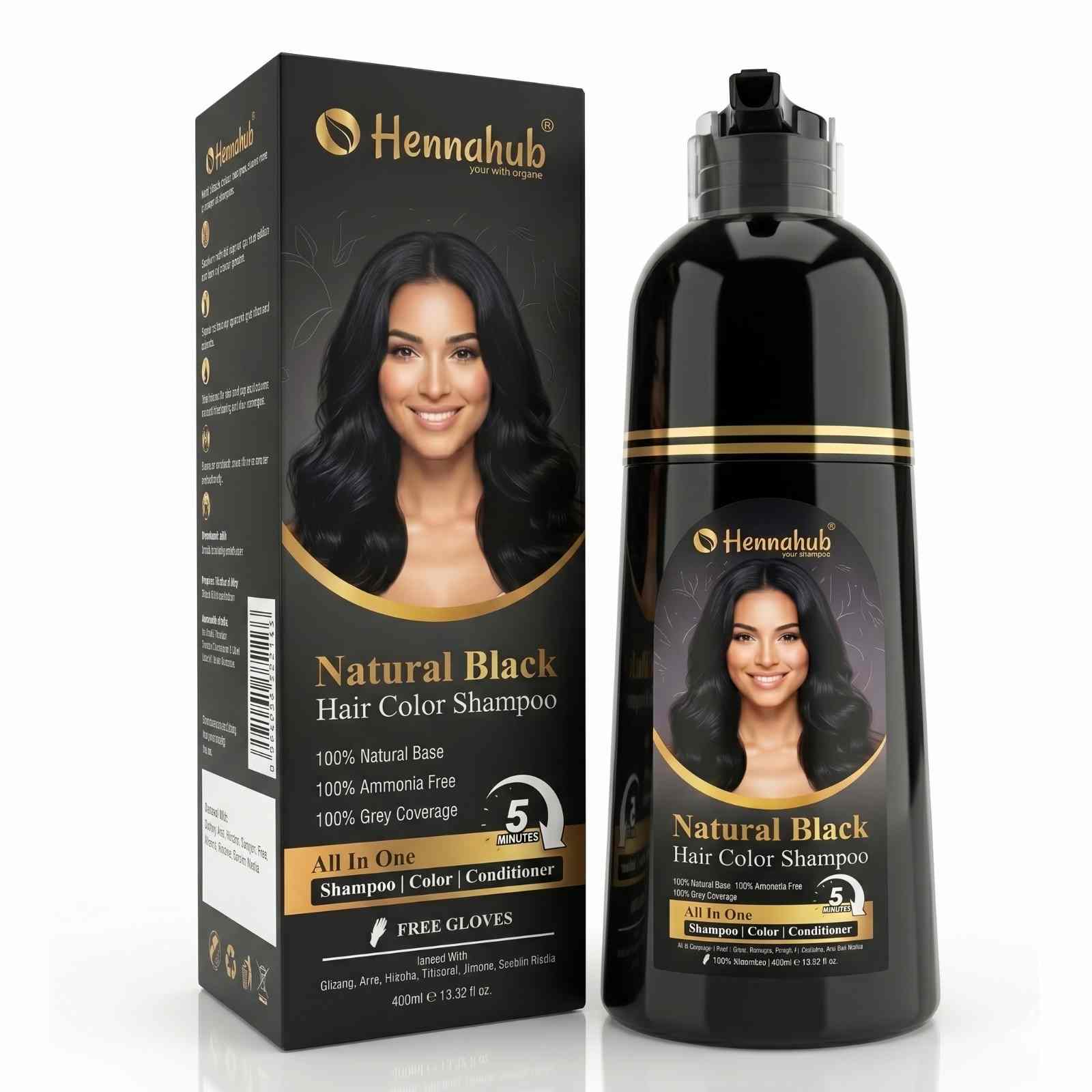
Pack details, prices, stock and delivery coverage may differ. Retail listing wording is not independent evidence of formula or performance. Wholesale terms require separate confirmation.
Frequently Asked Questions
Is global demand growing in 2026?
Established professional and at-home offerings show that the proposition remains commercially relevant. However, the evidence reviewed does not establish one verified global growth rate for all ammonia-free formats. Broader hair-care growth cannot be applied directly to this segment. Examine local sell-through, customer feedback and repeat orders for the specific channel.
Does ammonia-free mean safer for everyone?
No. Removing one ingredient does not establish suitability of the complete formula for every user. Coloring agents and other ingredients still need assessment. Follow supplied precautions and seek appropriate advice after a previous reaction. Brands should support specific statements instead of using ammonia-free as a universal safety guarantee.
What should a five-minute claim mean?
It should describe a supported processing time under defined conditions and match the label. It should not imply that testing, preparation, application and rinsing all fit into five minutes. Buyers should clarify when timing starts, which starting hair conditions were assessed and what result was measured before approving the claim.
Are instant dye and wash-in color identical?
Not necessarily. These phrases can describe convenience or application without identifying the coloring system. Similar names may cover products with different preparation, permanence and maintenance. Compare complete specifications and directions. The word instant should not replace the actual processing instructions or imply that preparation and precautions are unnecessary.
Does paraben-free mean preservative-free?
These are different claims. Paraben-free describes the absence of a particular ingredient group; it does not describe the full preservation approach. Request formula information and relevant product-integrity evidence. Removing a named group does not independently establish improved performance or remove the need for appropriate microbiological controls in the finished product.
What does herbal hair darkening tell buyers?
On its own, the phrase leaves important questions unanswered. Ask which botanical ingredients are present, their purpose and which ingredients create the color. Botanical identity does not establish finished-product performance. A useful supplier response connects the actual formula, approved claims and evidence rather than relying only on traditional-use language or plant imagery.
Should buyers prefer products with argan oil?
Only if the complete product meets their requirements. With argan oil identifies an ingredient claim when supported by the formula, but it does not explain the entire coloring system. Compare directions, performance evidence and suitability. Do not select a formula solely because one familiar oil appears prominently in advertising.
Can a three-in-one color shampoo be used daily?
Do not infer frequency from the format name. A coloring product should be used according to its specific instructions, even when its positioning includes cleansing or conditioning. Buyers should ensure that pages and staff guidance communicate the same frequency and precautions. Combined-function positioning does not automatically establish everyday shampoo use.
What should an importer request before ordering?
Obtain the exact specification, ingredient information, label, available technical records, sample terms and quotation. Add the destination checklist and clarify responsibility for compliance review. Confirm packing, shipping classification and delivery arrangements. Written agreement reduces the chance that buyer and supplier are discussing different products, configurations or commercial responsibilities.
Can an Indian supplier support private labeling?
Feasibility must be confirmed for the exact formula, pack, quantity and destination. Ask who owns the formula, approves artwork, controls changes and maintains relevant records. MOQ, testing, price and lead time need written confirmation. A company’s herbal-powder business does not independently establish liquid hair-color OEM capability for a proposed product.
Key Takeaways
- Ammonia-free describes a formula attribute, not a complete safety assessment.
- Evaluate demand by format, destination and channel.
- Convenience claims need clear conditions and supporting evidence.
- Ingredient transparency and consistent directions improve decisions.
- Repeat purchases and documentation matter more than trend language.
The Outlook: Clearer Products, Better Decisions
The opportunity is to make a specific coloring routine clearer and more dependable. A well-supported product can give customers a reason to choose it without overstating what an ingredient exclusion means.
For businesses, the next step is a defined buying brief and an evidence-based product review—not a purchase based solely on a market-growth headline.
Discuss Your Wholesale Requirements
Share your destination, quantity, pack and document requirements with HennaHub India. Product specifications, MOQ, samples, private-label feasibility and commercial terms require confirmation.
HennaHub IndiaSojat City, Rajasthan, India
[email protected]
+91 89555 56789
Related Reading and Brand Resources
- Black Hair Color Shampoo vs. Traditional Hair Dye
- HennaHub India
- HennaHub Company Website
- Hair-Care Education at mehandi.org
HennaHub’s websites are brand-operated resources, not independent endorsements. This article does not report independent product testing or guarantee search rankings, rich results or AI citations. Verify destination requirements before a commercial launch.